

 |
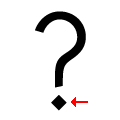
The dot on the '?' (question-mark) is diamond-shaped or triangular.
|
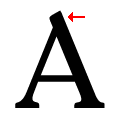 |
The top of the upper-case 'A' has a serif or cusp on the left.
|
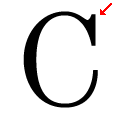 |
The top stroke of the upper-case 'C' has a vertical or angled upward-pointing serif.
|
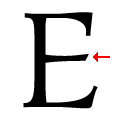 |
The centre bar of the upper-case 'E' has no serifs.
|
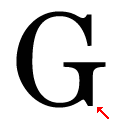 |
The upper-case 'G' foot has a downward pointing spur.
|
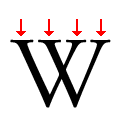 |
The top of the upper-case 'W' has four upper terminals.
|
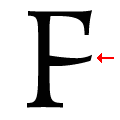 |
The centre bar of the upper-case 'F' has no serifs.
|
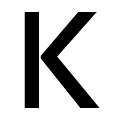 |
The junction of the upper-case 'K' leaves a visible gap with the vertical.
|
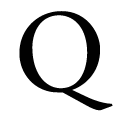 |
The tail of the upper-case 'Q' is single-sided.
|
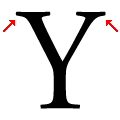 |
The arms of the upper-case 'Y' have two serifs each.
|
Note that the fonts in the icons shown above represent general examples, not necessarily the two fonts chosen for comparison.
Show Examples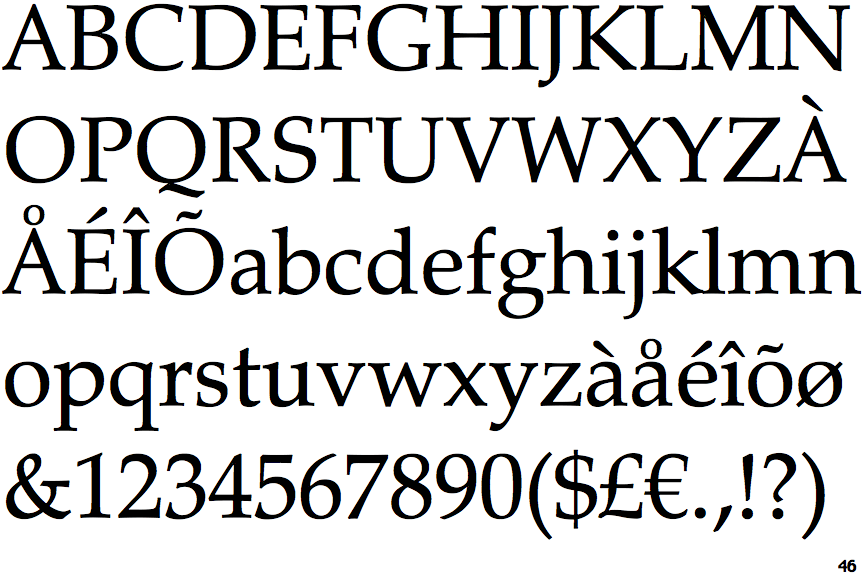
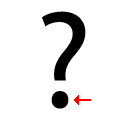 |
The dot on the '?' (question-mark) is circular or oval.
|
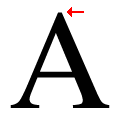 |
The top of the upper-case 'A' has no serifs or cusps.
|
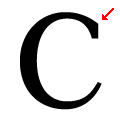 |
The top stroke of the upper-case 'C' has no upward-pointing serif.
|
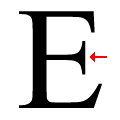 |
The centre bar of the upper-case 'E' has serifs.
|
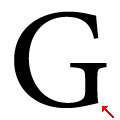 |
The upper-case 'G' foot has no spur or serif.
|
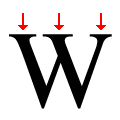 |
The top of the upper-case 'W' has three upper terminals.
|
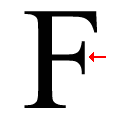 |
The centre bar of the upper-case 'F' has serifs.
|
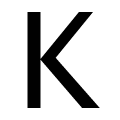 |
The junction of the upper-case 'K' touches the vertical.
|
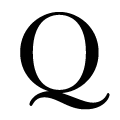 |
The tail of the upper-case 'Q' is double-sided.
|
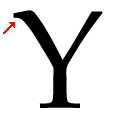 |
The arms of the upper-case 'Y' have one serif on the left, none on the right.
|