

 |
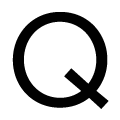
The upper-case 'Q' tail crosses the circle.
|
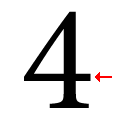 |
The bar of the '4' has no serifs or spur.
|
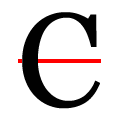 |
The upper-case 'C' is asymmetrical about a horizontal axis.
|
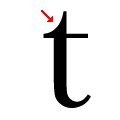 |
The lower-case 't' has double-sided bar which forms a diagonal with the vertical.
|
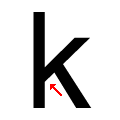 |
The diagonal strokes of the lower-case 'k' meet in a 'T'.
|
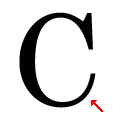 |
The lower stroke of the upper-case 'C' has no downward-pointing serif.
|
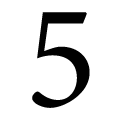 |
The top of the '5' has no serifs.
|
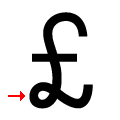 |
The foot of the '£' (pound) has an open loop.
|
Note that the fonts in the icons shown above represent general examples, not necessarily the two fonts chosen for comparison.
Show Examples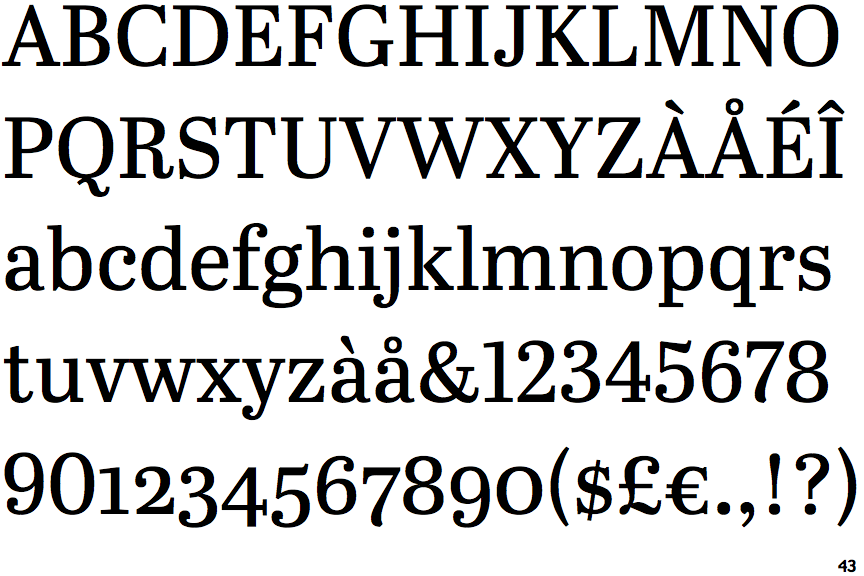
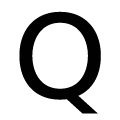 |
The upper-case 'Q' tail touches the circle.
|
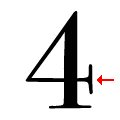 |
The bar of the '4' has double serifs.
|
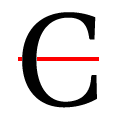 |
The upper-case 'C' is symmetrical about a horizontal axis.
|
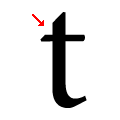 |
The lower-case 't' has double-sided bar which forms a right-angle with the vertical.
|
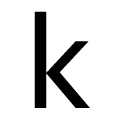 |
The diagonal strokes of the lower-case 'k' meet at the vertical (with or without a gap).
|
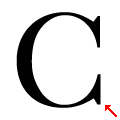 |
The lower stroke of the upper-case 'C' has a downward-pointing serif.
|
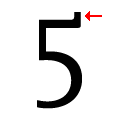 |
The top of the '5' has an upward-pointing spur or serif.
|
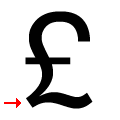 |
The foot of the '£' (pound) has no open loop.
|