

 |
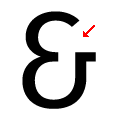
The '&' (ampersand) looks like 'Et' with a gap at the top.
|
 |
The upper-case 'J' sits on the baseline.
|
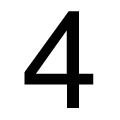 |
The '4' is closed.
|
 |
The verticals of the upper-case 'M' are parallel.
|
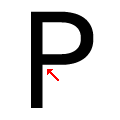 |
The centre bar of the upper-case 'P' meets the vertical.
|
 |
The upper-case 'G' has no spur/tail.
|
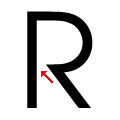 |
The centre bar of the upper-case 'R' leaves a gap with the vertical.
|
 |
The strokes are upright.
|
 |
The tail of the lower-case 'f' sits on the baseline.
|
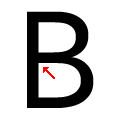 |
The centre bar of the upper-case 'B' meets the vertical.
|
There are more than ten differences; only the first ten are shown.
Note that the fonts in the icons shown above represent general examples, not necessarily the two fonts chosen for comparison.
Show Examples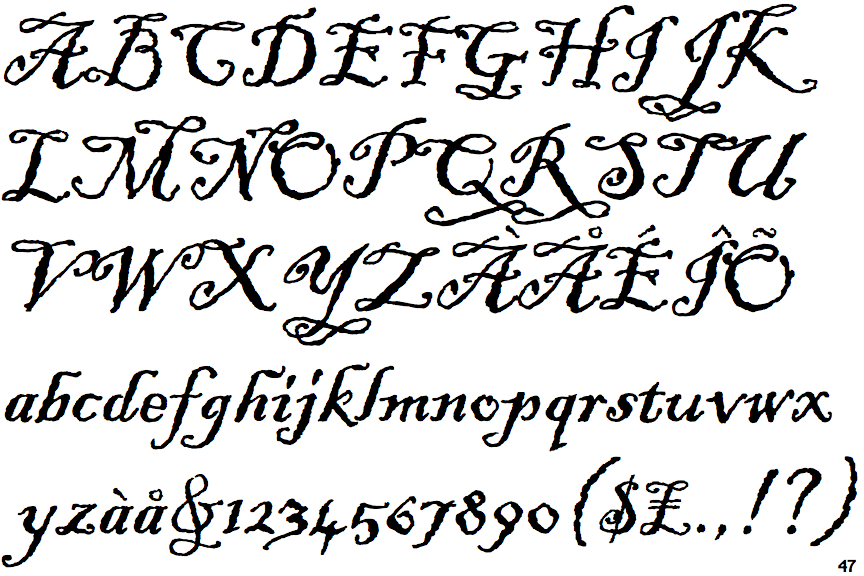
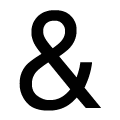 |
The '&' (ampersand) is traditional style with two enclosed loops.
|
 |
The upper-case 'J' descends below the baseline.
|
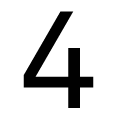 |
The '4' is open.
|
 |
The verticals of the upper-case 'M' are sloping.
|
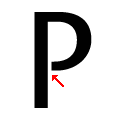 |
The centre bar of the upper-case 'P' leaves a gap with the vertical.
|
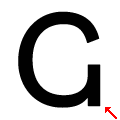 |
The upper-case 'G' has a spur/tail.
|
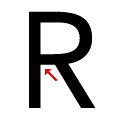 |
The centre bar of the upper-case 'R' meets the vertical.
|
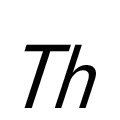 |
The strokes are sloped right (italic, oblique, or cursive).
|
 |
The tail of the lower-case 'f' descends below the baseline.
|
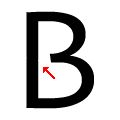 |
The centre bar of the upper-case 'B' leaves a gap with the vertical.
|