

 |
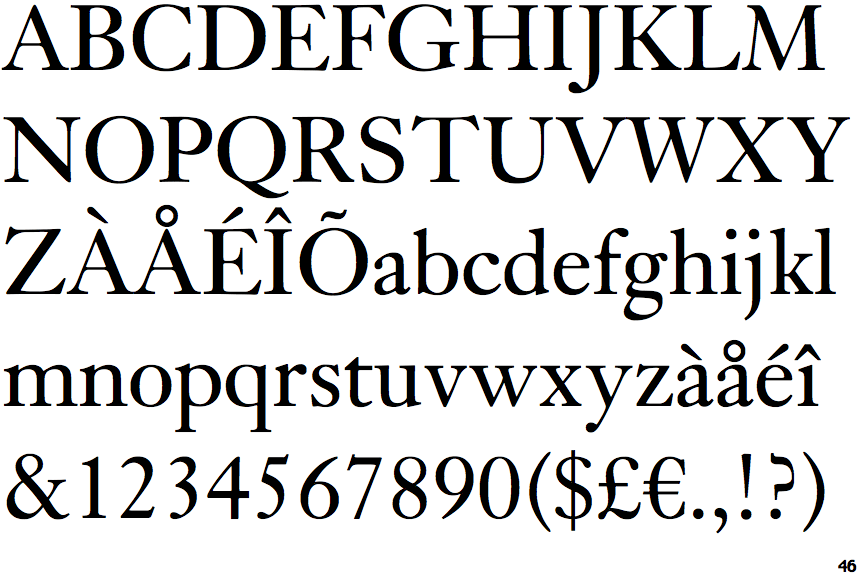
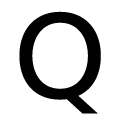
The upper-case 'Q' tail touches the circle.
|
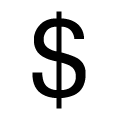 |
The '$' (dollar) has a single line crossing the 'S'.
|
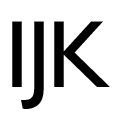 |
The upper-case 'J' descends below the baseline.
|
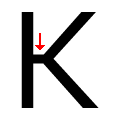 |
The diagonal strokes of the upper-case 'K' connect to the vertical via a horizontal bar.
|
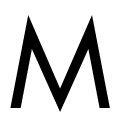 |
The verticals of the upper-case 'M' are sloping.
|
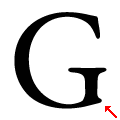 |
The upper-case 'G' foot has a forward pointing spur or serif.
|
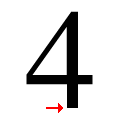 |
The foot of the '4' has no serifs.
|
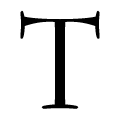 |
The top of the upper-case 'T' has upward-pointing serifs.
|
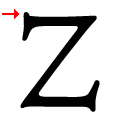 |
The top stroke of the upper-case 'Z' has a vertical or angled upward-pointing serif.
|
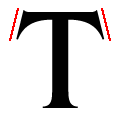 |
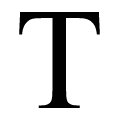
The serifs of the upper-case 'T' are angled in opposite directions.
|
There are more than ten differences; only the first ten are shown.
Note that the fonts in the icons shown above represent general examples, not necessarily the two fonts chosen for comparison.
Show Examples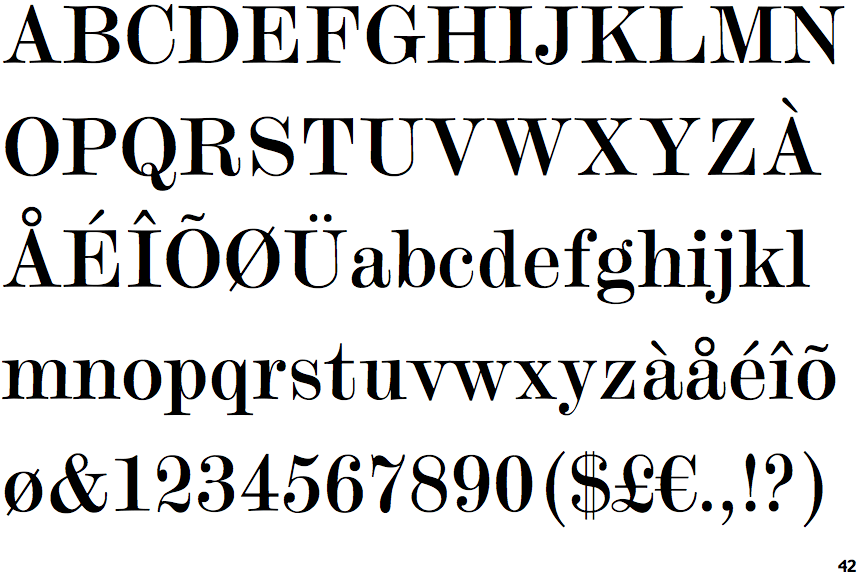
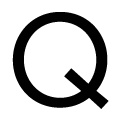 |
The upper-case 'Q' tail crosses the circle.
|
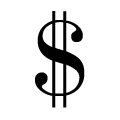 |
The '$' (dollar) has a double line crossing the 'S'.
|
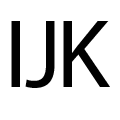 |
The upper-case 'J' sits on the baseline.
|
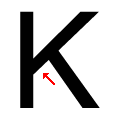 |
The diagonal strokes of the upper-case 'K' meet in a 'T'.
|
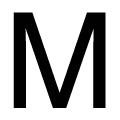 |
The verticals of the upper-case 'M' are parallel.
|
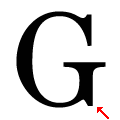 |
The upper-case 'G' foot has a downward pointing spur.
|
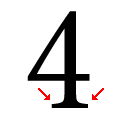 |
The foot of the '4' has double-sided serifs.
|
 |
The top of the upper-case 'T' has a flat top.
|
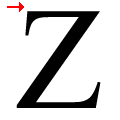 |
The top stroke of the upper-case 'Z' has no upward-pointing serif.
|
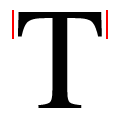 |
The serifs of the upper-case 'T' are both vertical or nearly vertical.
|