

 |
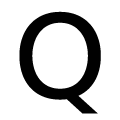
The upper-case 'Q' tail touches the circle.
|
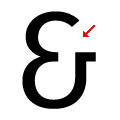 |
The '&' (ampersand) looks like 'Et' with a gap at the top.
|
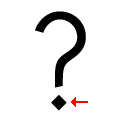 |
The dot on the '?' (question-mark) is diamond-shaped or triangular.
|
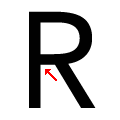 |
The centre bar of the upper-case 'R' meets the vertical.
|
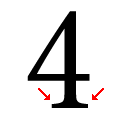 |
The foot of the '4' has double-sided serifs.
|
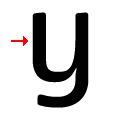 |
The sides of the lower-case 'y' are parallel (U-shaped).
|
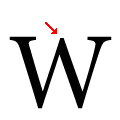 |
The centre vertex of the upper-case 'W' has no serifs.
|
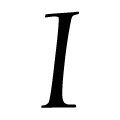 |
The upper-case 'I' is a single stroke with serifs.
|
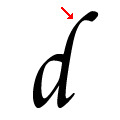 |
The ascender of the lower-case 'd' curves towards the right.
|
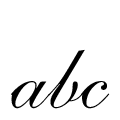 |
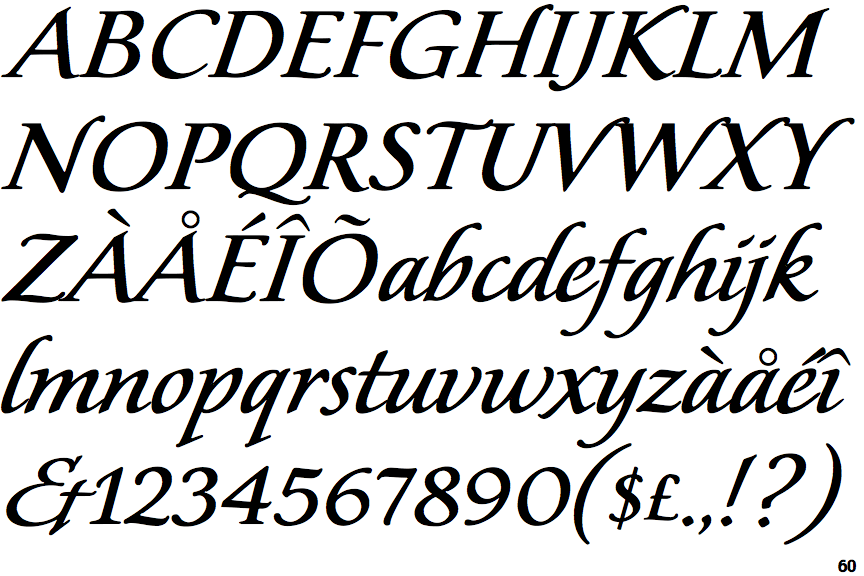
The lower-case letters are joined-up (flowing or cursive).
|
Note that the fonts in the icons shown above represent general examples, not necessarily the two fonts chosen for comparison.
Show Examples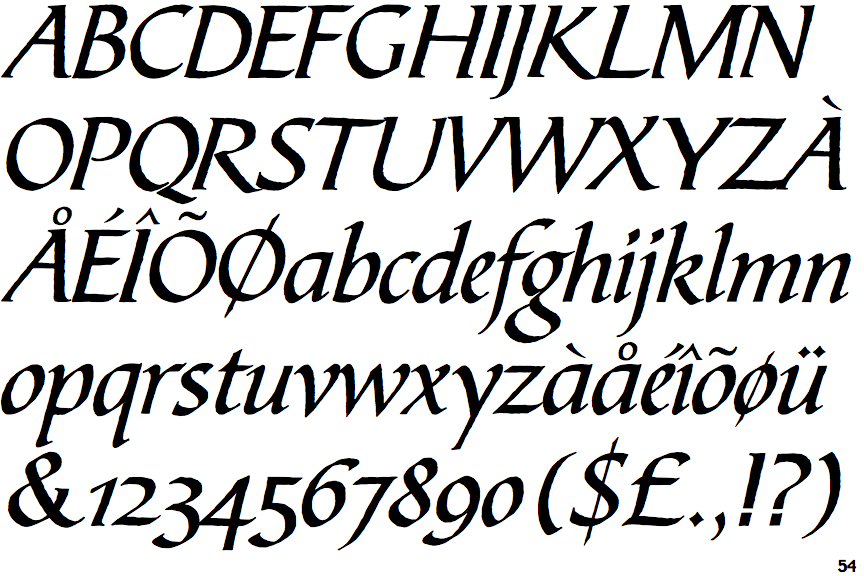
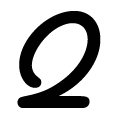 |
The upper-case 'Q' tail forms part of the stroke of an open circle.
|
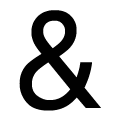 |
The '&' (ampersand) is traditional style with two enclosed loops.
|
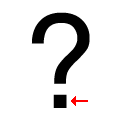 |
The dot on the '?' (question-mark) is square or rectangular.
|
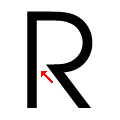 |
The centre bar of the upper-case 'R' leaves a gap with the vertical.
|
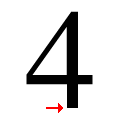 |
The foot of the '4' has no serifs.
|
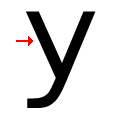 |
The sides of the lower-case 'y' are angled (V-shaped).
|
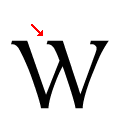 |
The centre vertex of the upper-case 'W' has a single left-facing serif.
|
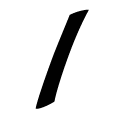 |
The upper-case 'I' is a single stroke with no serifs.
|
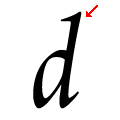 |
The ascender of the lower-case 'd' is straight.
|
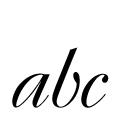 |
The lower-case letters are separate.
|